
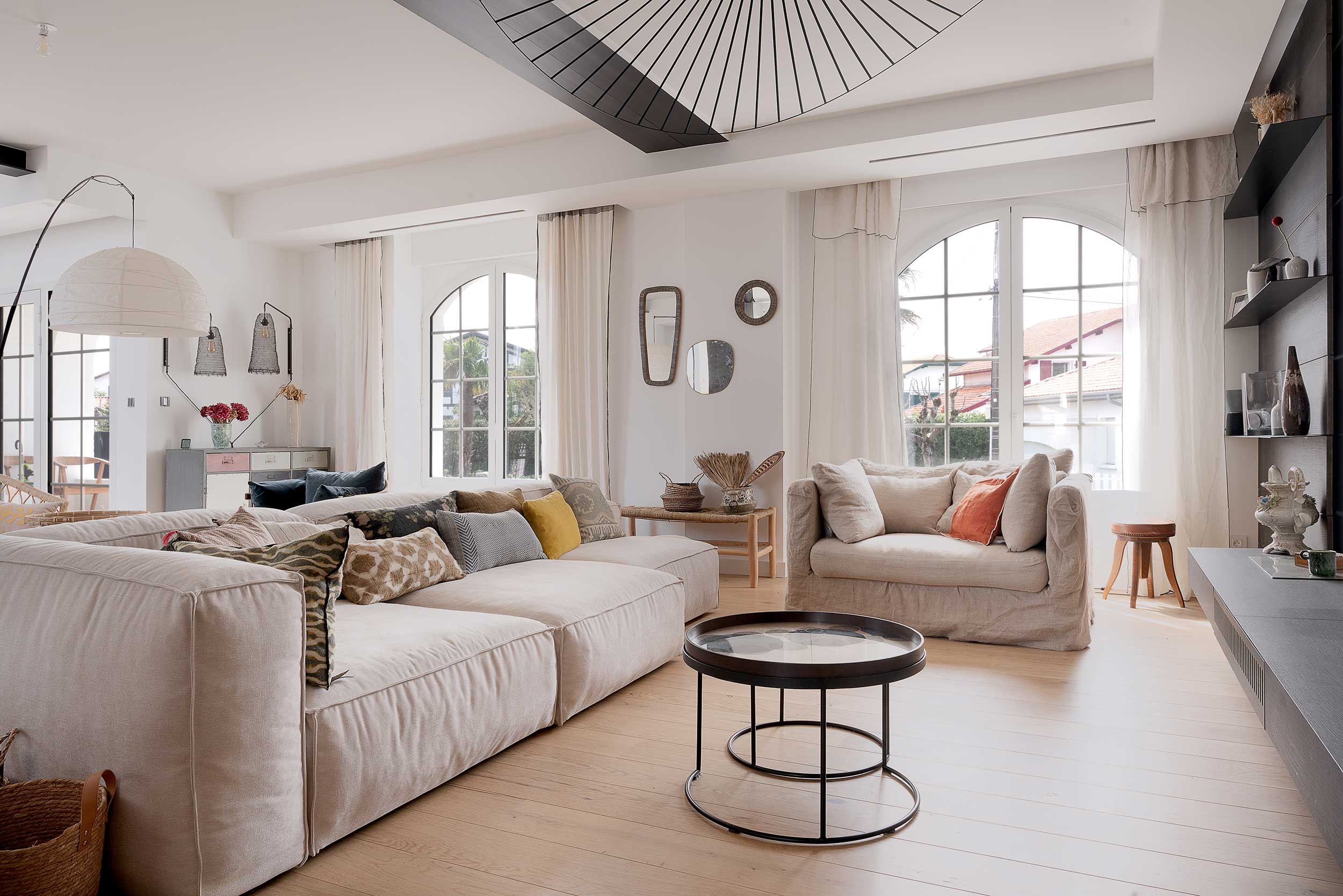
Transforming your home doesn’t necessarily mean undertaking major renovations or completely rethinking the layout of your living space. Interior design often allows you to improve the comfort, clarity, and harmony of a space by making simple yet impactful changes.
Colors, materials, furniture, lighting, and staging play a decisive role in how a space is perceived. When thoughtfully coordinated, these elements are enough to restore meaning and character to an interior, without any structural changes.
Understanding Interior Design
Interior design involves shaping the atmosphere and identity of a space based on its existing features. It relies on a careful analysis of the space’s dimensions, lighting, and intended uses to propose targeted, aesthetic, and functional adjustments.
Unlike interior architecture, interior design does not necessarily involve altering the layout or undertaking technical work. It is used as a complement or as a preliminary step to reveal a space’s potential and make it more pleasant to live in on a daily basis.
Why interior design is important
An interior can quickly become disjointed due to successive additions, partial changes, or unforeseen constraints. Interior design helps restore a sense of cohesion and ensures continuity between the different rooms.
It plays a key role in:
- improve visual comfort and the atmosphere,
- make the most of natural light,
- organize spaces without partitioning them,
- adapt an interior to changing needs.
👉 Discover our interior design services in the Basque Country and Southern Landes
Different Approaches to Interior Design
Exploring colors and materials
Colors and materials directly influence the perception of space. A cohesive color palette helps unify a space, while materials add texture and depth.
A detailed study of:
- wall colors,
- textures (wood, textiles, minerals),
- Subtle contrasts—
—can often transform a room without any structural changes.
Rethinking furniture and its layout
Furniture shapes a space just as much as architecture does.
Sometimes, simply rearranging the layout, adjusting the proportions, or adding a few well-chosen pieces is enough to improve the flow and clarity of an interior.
This approach emphasizes functionality and balance rather than accumulation.
Pay attention to lighting and lighting atmospheres
Lighting is a central element of interior design. It helps define spaces, create atmospheres, and highlight architectural features.
Using multiple light sources, adjusting brightness levels, and tailoring the lighting to specific uses can profoundly transform the atmosphere of a space.
Comparison Chart of Decorative Handles
| Decorative lever | Main action | Impact on space |
|---|---|---|
| Colors & Materials | Harmonize and structure | Perception of volume |
| Furniture | Reorganize and streamline | Circulation and Use |
| Lighting | Create atmospheres | Comfort and readability |
Best practices and common mistakes to avoid
Best practices
- Working with a limited and consistent color palette
- Choose furniture that fits the actual size of the rooms
- Prioritize the quality and durability of the components
Common Mistakes
- Mixing styles without a common theme
- Underestimating the importance of lighting
- Adding decorative elements without an overall design scheme
Real-world examples or use cases
In the Darroman Design® projects, interior design allows, for example:
- to create a harmonious living space without changing its layout,
- to restore coherence to an existing interior,
- to support a minor renovation or a change in use,
- to highlight a specific location before moving on to a broader project.
These gradual interventions often result in a noticeable transformation, while remaining controlled.
FAQ – Interior Design
Is it possible to transform an interior without doing any major renovations?
Yes. Interior design focuses on colors, materials, furniture, and lighting, which allows you to transform a space without major renovations.
Is interior design possible on a tight budget?
Yes, as long as you set your priorities and take a consistent approach. A few well-thought-out adjustments can make a significant difference.
Should you hire an interior designer for just one room?
Yes. Focusing on a single room often improves the entire home by creating a sense of visual continuity.
Conclusion
Interior design offers a flexible and accessible way to transform a space without undertaking major renovations. By thoughtfully coordinating colors, furniture, and lighting, it is possible to permanently enhance the comfort and harmony of a home.
This approach often serves as a useful first step before a more comprehensive project, or as an effective solution for adapting a space to new uses.
0 comments