
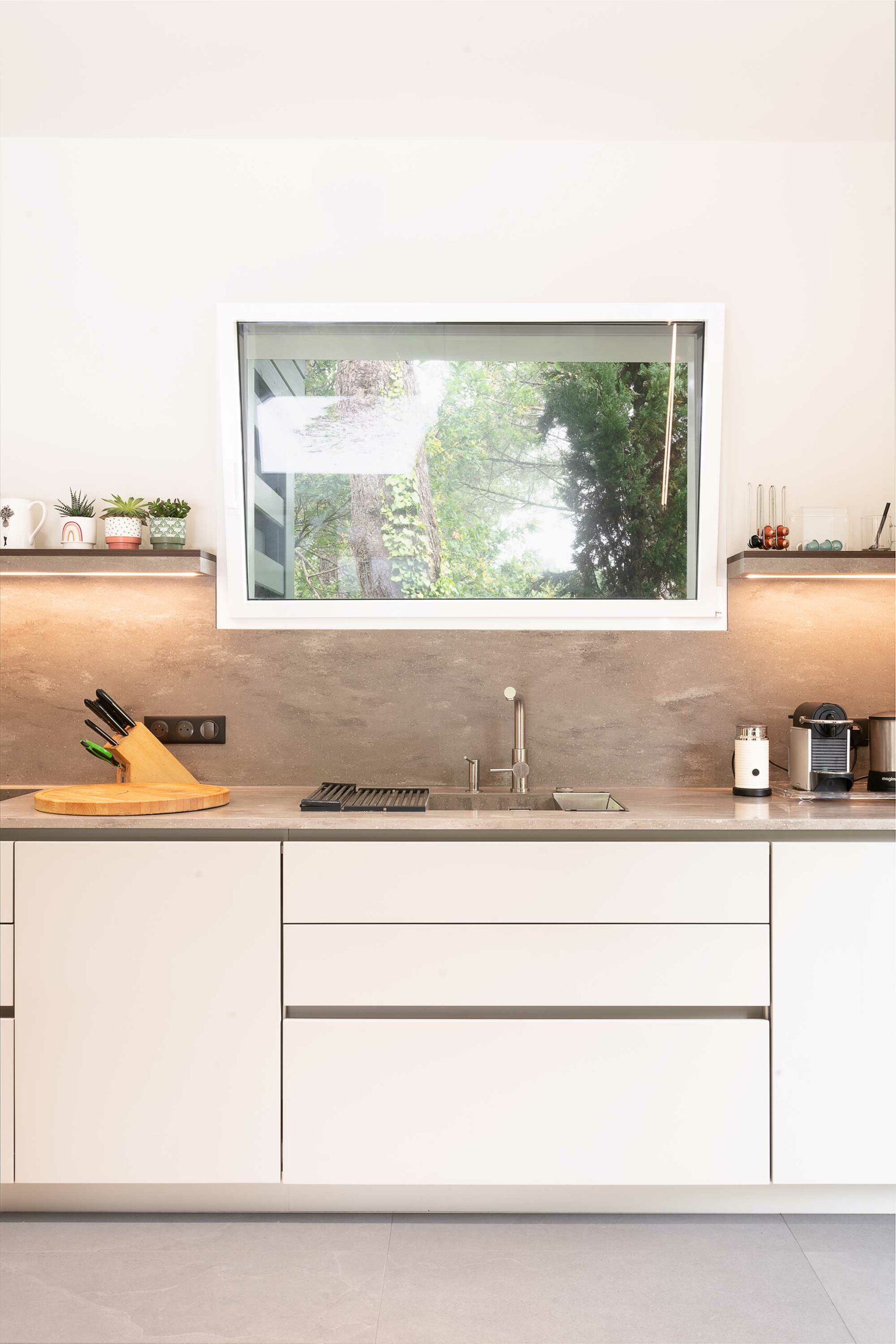
Choosing between an interior architect, an interior decorator, and an interior designer depends mainly on your specific needs: reorganizing spaces, creating a certain atmosphere, or designing a cohesive interior down to the smallest detail. In this article, you’ll learn the practical differences between these professions, with examples and simple guidelines to help you decide.
Why does this question come up all the time?
In reality, many projects start with a simple desire: “I want to feel more comfortable at home” or “I want to modernize.” Then, very quickly, you run into a question: who should you contact?
The terminology can be confusing, as these professions sometimes overlap. However, their roles are not the same, and making the right choice from the start helps ensure clarity, consistency… and often keeps costs under control.
1) The interior designer: bringing out the atmosphere without altering the structure
Interior designers focus primarily on the aesthetics and atmosphere of a space. They work with what’s already there and propose visible, harmonious improvements without necessarily altering the layout of the spaces.
What he/she does most often
- Coordinate colors, materials, fabrics, and styles
- Select furniture, lighting, and decorative items
- Create a cohesive presentation
- Help create a certain atmosphere (beachside, contemporary, cozy, minimalist, etc.)
For what projects?
- Refresh Your Home Without Major Renovations
- Redesigning a room (living room, bedroom, entryway) while maintaining the original layout
- Giving a second home its own identity
- Creating a cohesive look in a space where “nothing goes together”
2) The interior designer: creating an overall sense of cohesion (aesthetics + functionality)
The term “interior designer” is often used to describe a more holistic and conceptual approach to interior design. It’s not just about “making things look nice,” but about creating an overall sense of coherence: flow, proportions, viewpoints, lighting, comfort, and material selection.
What he/she brings to the table
- An overview (functionality + aesthetics)
- A meticulous exploration of lines, forms, rhythms, and contrasts
- A more structured selection of materials and furnishings (furniture, lighting fixtures)
- A quest for balance and sustainability in decision-making
For what projects?
- Create a contemporary and cohesive interior
- Focus on elegance and simplicity without overdoing it
- Create a “structured” ambiance (ideal for architect-designed homes)
- Give a place a strong identity, with a more meticulous attention to detail
3) The interior designer: reimagining space, volume, and sometimes the structure
An interior designer is called upon whenever you want to redesign the layout of a space: moving a kitchen, opening up a room, reworking the flow of traffic, optimizing the use of space, incorporating custom solutions…
Depending on the project, he or she works with plans, renderings, and technical coordination (tradespeople, contractors, and project oversight).
What he/she typically does
- Rethinking spaces and circulation
- Provide floor plans and 3D renderings
- Designing integrated layouts (kitchen, walk-in closet, storage)
- Define materials, finishes, and technical specifications
- Coordinate the project with the contractors (depending on the scope)
For what projects?
- Complete or partial renovation
- Optimizing a house or apartment (maximizing space and light)
- Comprehensive interior design project (kitchen, walk-in closet, custom bookshelves)
- Renovation of a commercial space (office, store, or office space)
Comparison Chart
| Occupation | Primary Mission | Perfect if… | Level of intervention |
|---|---|---|---|
| Interior Designer | Atmosphere, style, harmonies | You keep the space as it is | Aesthetics |
| Interior designer | Overall consistency (functionality + aesthetics) | Are you looking for a signature style or a structured interior? | Form + Function |
| Interior Designer | Organization, volumes, design | You are renovating the space or undertaking construction work | Function + Technology |
Still not sure? Here's a simple rule
- If you want to change the atmosphere → interior designer
- If you want a cohesive and well-organized interior → interior designer
- If you want to transform the space (floor plans / layout / renovations) → interior designer
In practice, on comprehensive projects, these approaches are often combined: we start with the space (interior architecture), then move on to the layout, and finally to the decor, to achieve a seamless and cohesive result.
Interior architects, decorators, and interior designers do not all perform the same job, but they share a common goal: to improve the quality of the spaces in which we live. Understanding their respective roles allows you to choose the right professional to support you based on the nature of your project, its constraints, and your expectations.
Whether it involves reimagining spatial layouts, structuring an interior, or simply refining its atmosphere, the key lies in achieving harmony between function, aesthetics, and the space itself. It is this holistic approach to the project that results in an interior that is functional, harmonious, and built to last.
To take things a step further, it is often helpful to consult with professionals who can grasp all these aspects and offer a customized solution, taking into account the context, intended uses, and both technical and decorative choices.
FAQ – Interior Architect, Decorator, Designer
What is the difference between an interior designer and an interior architect?
An interior decorator works to enhance the aesthetics and atmosphere of a space based on its existing features. An interior architect becomes involved when the layout of spaces and volumes is being redesigned and, depending on the project, when technical coordination is required.
Can you hire an interior designer without doing any renovations?
Yes. In fact, this is one of the most common scenarios: coordinating colors, selecting furniture and lighting, and styling the space—all without altering the home’s structure.
Is an interior designer more focused on decoration or architecture?
This is a comprehensive, integrated approach: it aims to create aesthetic and functional coherence by carefully considering proportions, lighting, materials, and usage, sometimes through custom designs.
| About Darroman Design® : Darroman Design® assists both private clients and professionals with their interior design, decoration, and layout projects. The team leverages a design showroom in Capbreton, as well as in-house carpentry and marble workshops, to design and create cohesive, functional, and aesthetically pleasing interiors. Learn more: Discover ourinterior design Discover our interior design Learn more aboutinterior design See our projects : (projects page) |

0 comments