
Choosing furniture is a key step in any interior design project. Between standard furniture and custom-made furniture, the options are numerous and the trade-offs can sometimes be complex.
This choice is not merely a matter of aesthetics or budget: it directly impacts the functionality, clarity of spaces, and longevity of the project.
Understanding the differences between these two approaches allows you to make a decision that aligns with your interior, its constraints, and your lifestyle.
Clarify what is included in custom furniture
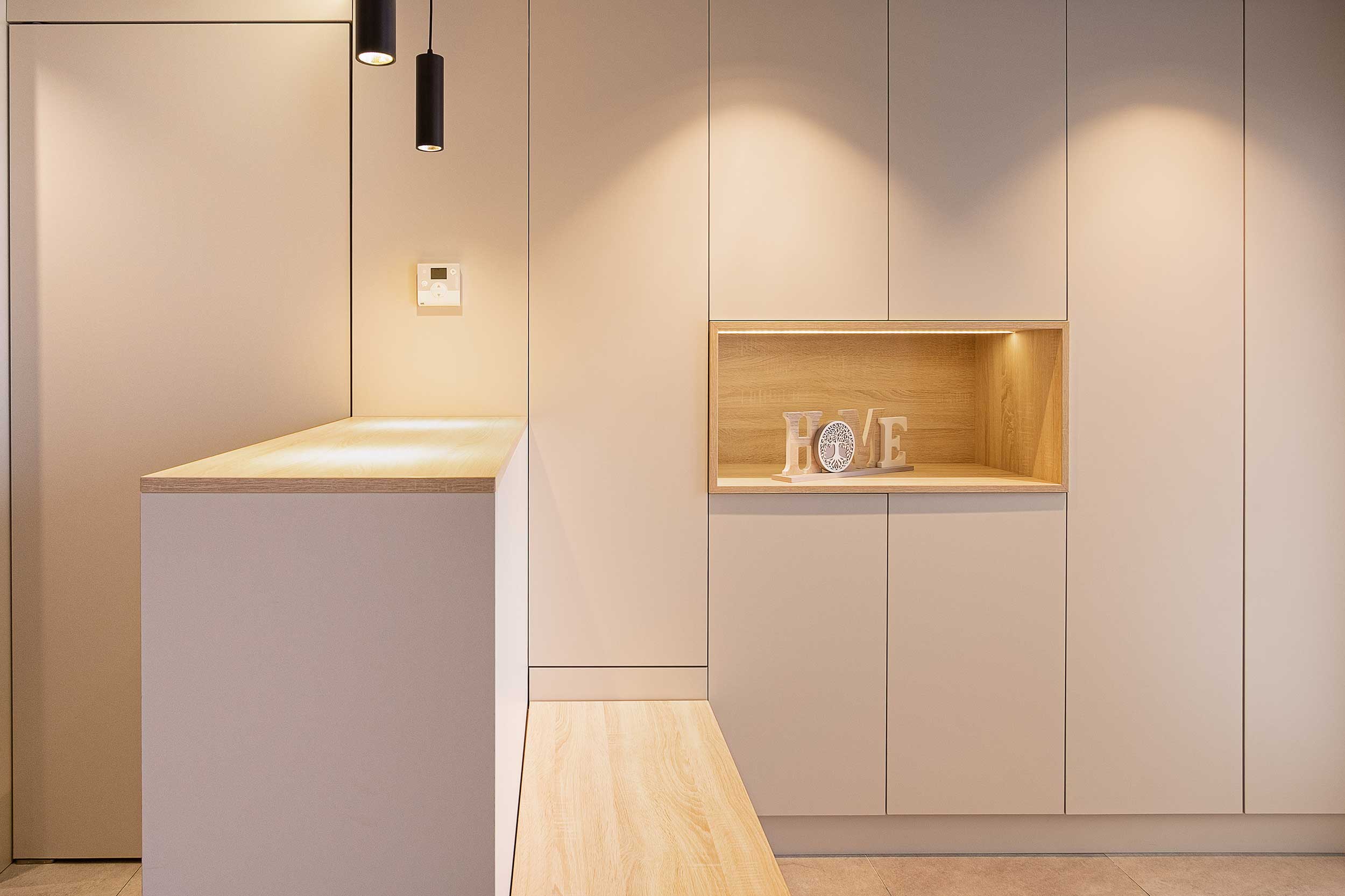
Custom furniture is designed specifically for a given space, taking into account its dimensions, technical constraints, and intended uses.
It is not simply a matter of adapting a piece of furniture to a specific size, but of considering how it fits into the overall design project.
This approach allows us to focus on:
- volume optimization,
- visual continuity,
- the perfect balance between function and aesthetics.
Understanding the Limitations and Advantages of Commercial Furniture
Commercial furniture is based on standardized dimensions and uses. It offers a wide variety of styles and allows you to quickly furnish an interior.
When chosen carefully, it can perfectly meet certain needs, particularly in simple or temporary spaces.
Its main strengths lie in:
- immediate availability,
- budget control,
- the diversity of the collections on offer.
However, it can reach its limits when space is limited or when a very precise integration is required.
Compare the two approaches to make a better decision
| Criterion | Commercial furniture | Custom furniture |
|---|---|---|
| Adaptation to the space | Standardized | A perfect fit |
| Volume Optimization | Limited | Maximum |
| Aesthetic consistency | Variable | Included in the project |
| Sustainability | Depends on the product lines | Long-term thinking |
This comparison shows that the choice depends primarily on the project context and the priorities established in advance.
The right questions to ask yourself before making a choice
Before deciding on one option or the other, it is essential to consider:
- the actual function of the piece of furniture,
- frequency of use,
- space constraints (height, depth, traffic flow),
- the role of the furniture in the overall project.
In many cases, a combination of both approaches works well: ready-made furniture for certain items, and custom-made pieces to structure and organize key spaces.
Real-world use cases in an interior design project
In the projects supported by Darroman Design®, custom-made furniture is often preferred for:
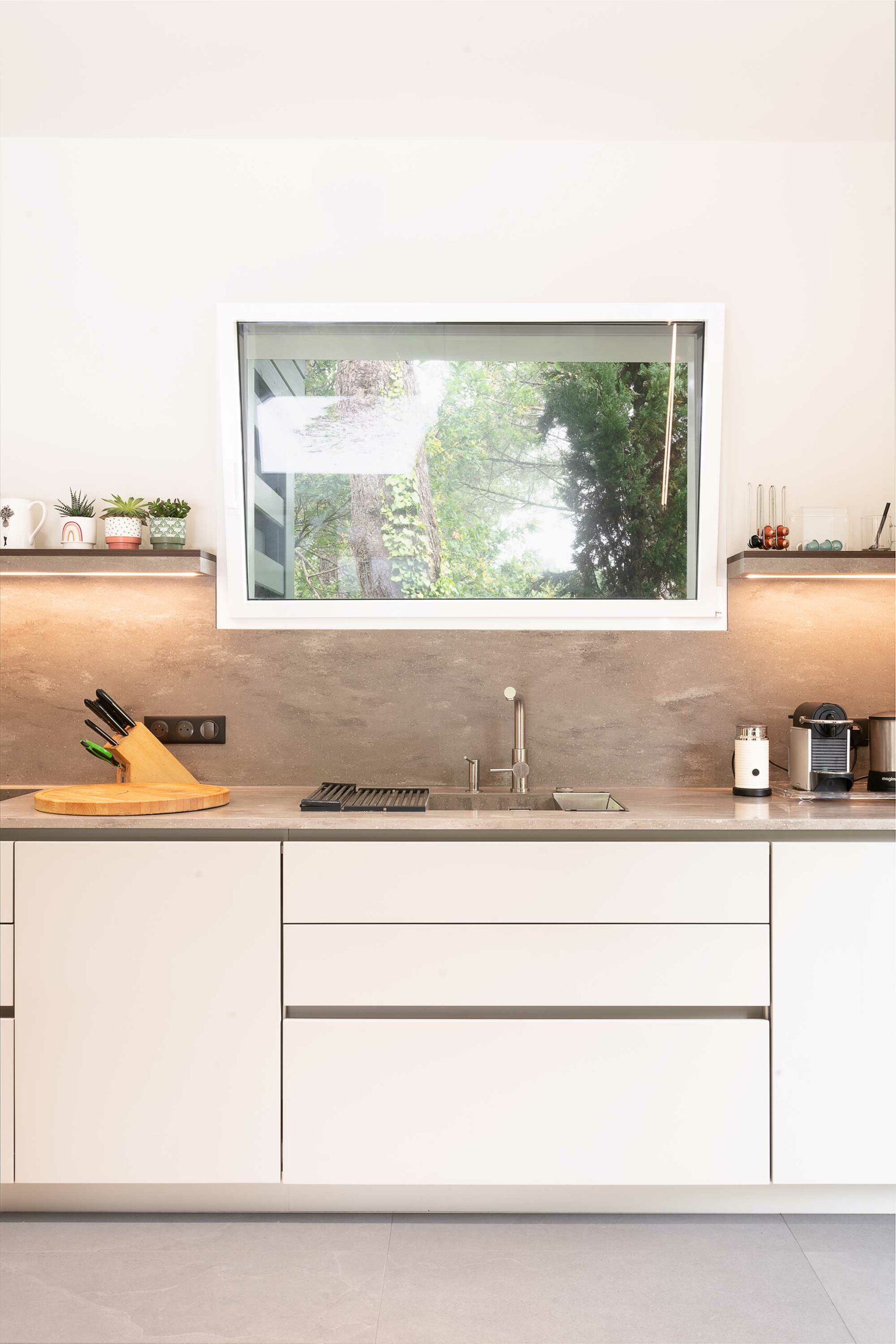
- kitchens and walk-in closets,
- built-in storage,
- bookcases or transitional furniture.
Ready-made furniture, on the other hand, can round out the look, offering flexibility and adaptability, particularly in living areas or bedrooms.
This synergy results in a functional, clear, and balanced interior.
FAQ – Custom Furniture
Is custom furniture only for large spaces?
No. It is often particularly well-suited to small spaces, where every centimeter counts and optimization is essential.
Is custom furniture always more expensive?
Not necessarily. While it requires an initial investment, it can save you from having to make repeated purchases and offer greater durability over time.
Is it possible to incorporate custom pieces without completely redecorating your entire home?
Yes. Custom pieces can be incorporated selectively to define a space or meet a specific need, without undertaking a full-scale renovation.
Conclusion
The choice between ready-made furniture and custom-made furniture should not be viewed as an either/or situation, but rather as part of a comprehensive consideration of the space’s intended use and overall design coherence.
By taking into account spatial constraints, actual needs, and the desired level of durability, it becomes possible to make balanced and appropriate choices that contribute to a long-lasting interior design.
0 comments